
Bring structure to the applications and interview preparation that MBA students navigate.
Simply useful.
Shape digital products around the people who use them. We connect research, interaction design and visual systems to make important tasks clearer and more manageable.
What we do.
Useful at every level.
A product is a sequence of decisions and interactions. We look at the whole journey and the details that make it work, from structure to the behavior of a component.
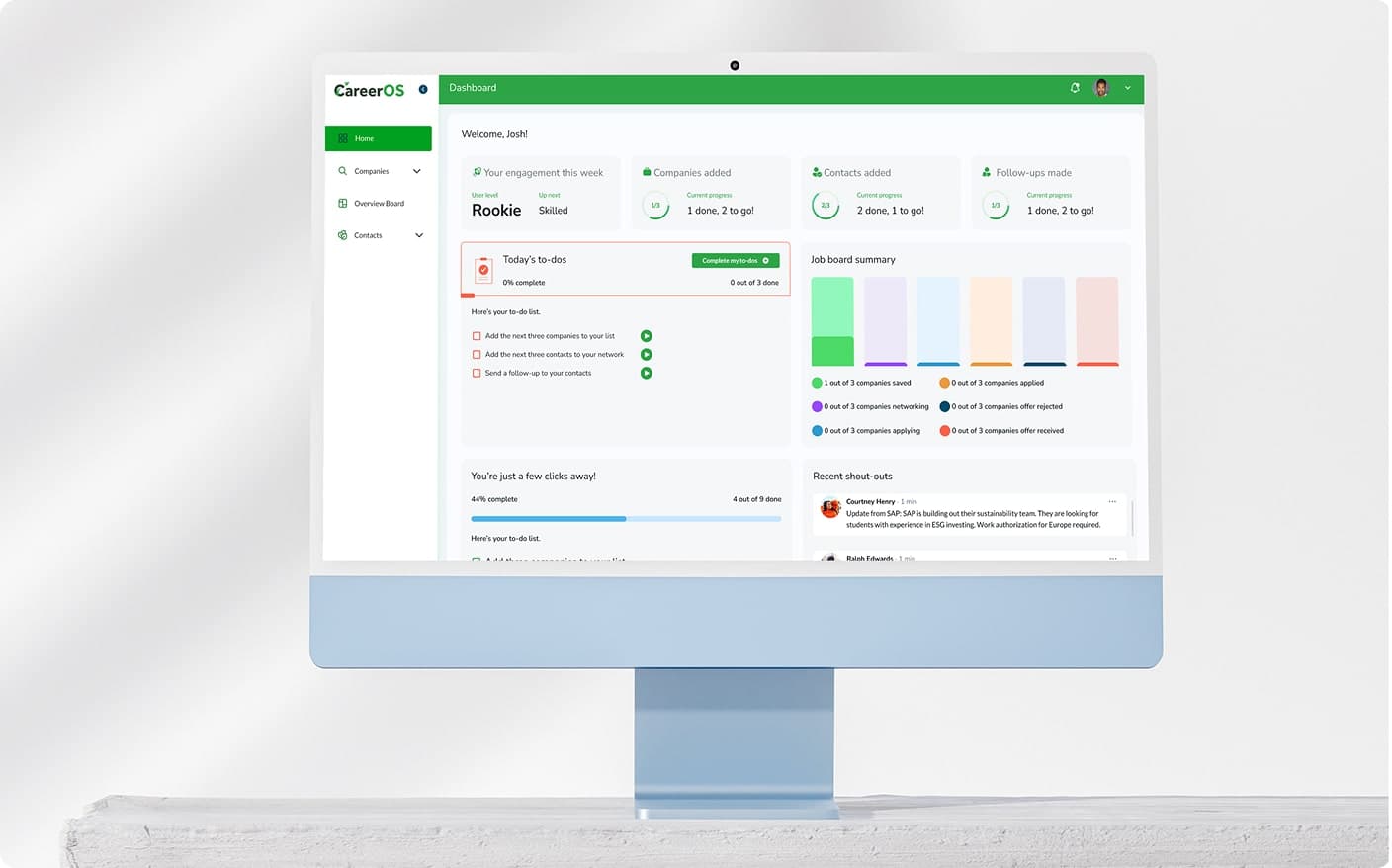
Application tracking, contacts and progress belong to one career journey. Our work connected the core interface with CareerOS’s visual identity.
The question behind the work
Can people see what to do next?
Develop user journeys, information architecture and interfaces around the product’s purpose and the needs of its users.
Give tasks a clear path
- User journeys
- Information architecture
- Interface design
The question behind the work
What do people actually need?
Plan research to answer specific product questions. Interviews, usability sessions and other methods are selected around your access, objectives and scope.
Replace assumptions with evidence
- Research questions
- Interviews & usability sessions
- Findings & priorities
The question behind the work
Can the team build from the same rules?
Define reusable components, states and visual rules that help designers and developers work from a shared language.
Build consistency into the product
- Reusable components
- States & behavior
- Usage guidance
The question behind the work
Does the interaction work before it is built?
Create prototypes at the fidelity needed to explore interactions and evaluate usability. Use what you learn to refine the direction before implementation.
Learn before committing
- Interactive prototypes
- Usability evaluation
- Refined interactions
We agree the methods, deliverables and responsibilities around your brief.
How we work.
Test. Learn. Refine.
Discover
From the first question to a considered result.Understand the task
Review users, product goals, constraints and the evidence already available.
- User tasks
- Product goals
- Constraints
At the end of this stage
A shared understanding of the product challenge.
Map
From the first question to a considered result.Make the structure clear
Develop journeys and wireframes that clarify navigation and key workflows.
- Journeys
- Information architecture
- Wireframes
At the end of this stage
Key journeys and an agreed interface structure.
Prototype
From the first question to a considered result.Make the ideas tangible
Design and prototype the core interactions, then test the questions that matter.
- Interaction design
- Prototypes
- Usability findings
At the end of this stage
A prototype and findings from the agreed evaluation.
Refine
From the first question to a considered result.Prepare a coherent handover
Resolve the interfaces, component states and design guidance needed for agreed implementation.
- Component states
- Interface specifications
- Developer handover
At the end of this stage
Resolved interfaces and implementation guidance.
CareerOS / Selected work
A simpler next step.
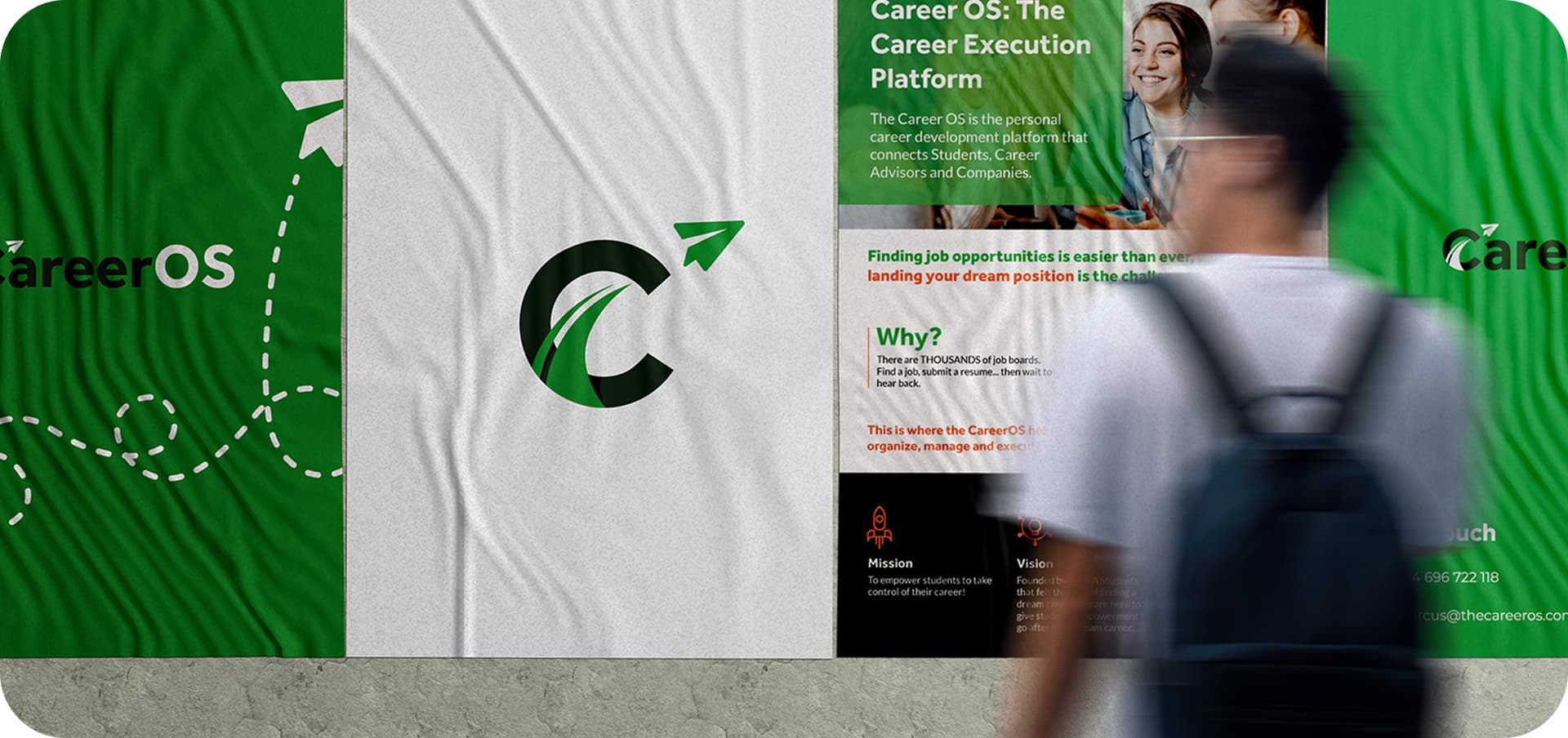
Connect the brand’s visual language with the dashboard and core product tools, creating a coherent career management experience.
Before we begin.
The practical side of product design.
No need to arrive with every answer.
Can you improve a product that already exists?
Yes. We can focus on a particular workflow or review a wider experience. The starting point is a clear problem and the evidence available.
Can you work alongside our developers?
Yes. We agree the collaboration and handover approach, including component states, specifications and the design support needed during implementation.
What if we cannot recruit users for research?
We discuss access early. Existing evidence and expert review can help, but we distinguish those findings from direct user research.
Is a design system necessary?
It depends on the product’s scale and the team’s needs. A small component library may be enough; a broader system should solve a real coordination problem.